
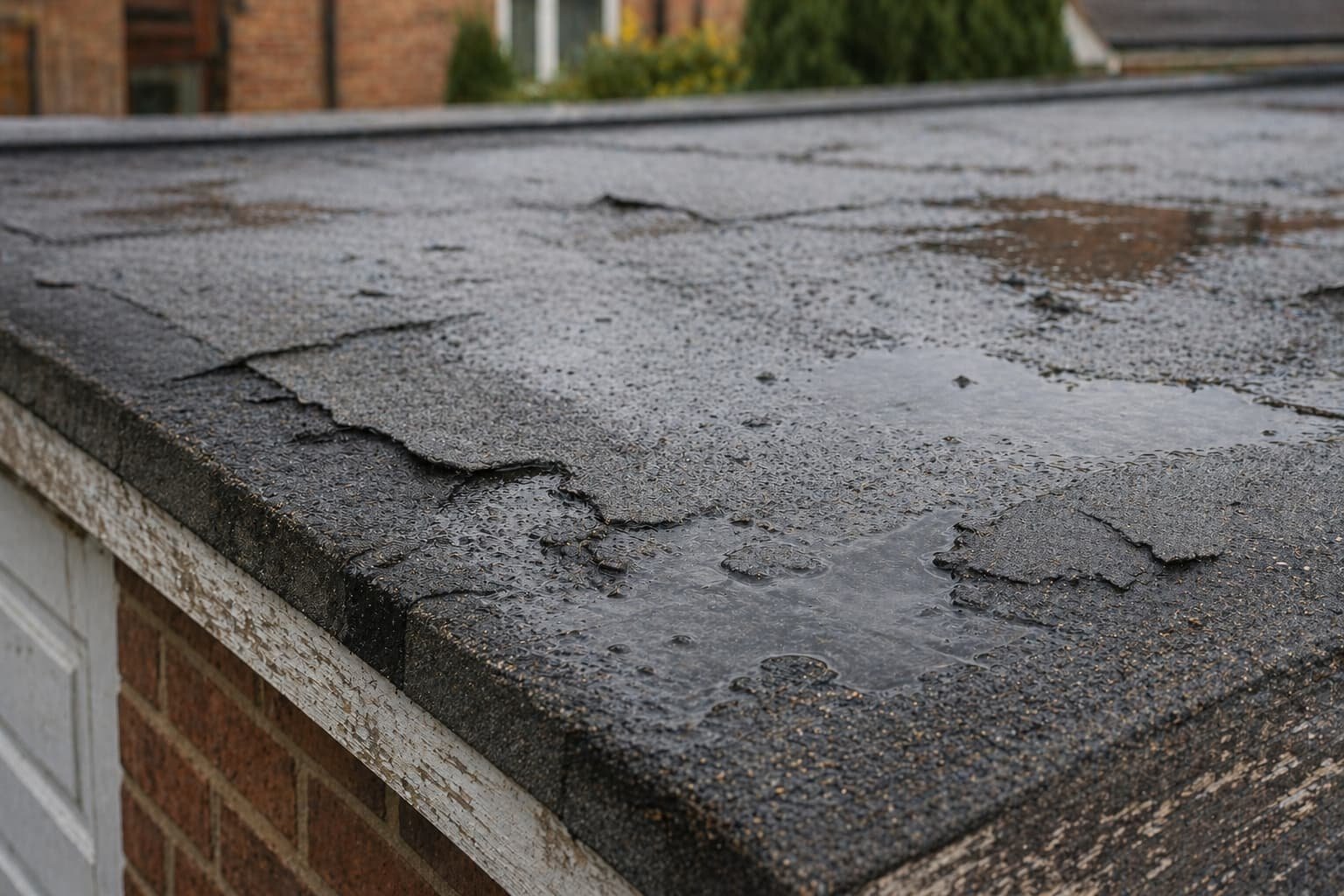
Flat roof problems caught early are almost always cheaper to fix than those left to develop. A small split in a felt membrane, a lifted flashing, or a blocked outlet can each be resolved quickly and inexpensively — but left unattended through a Wiltshire winter, the same issues can allow water into the roof structure, rot the deck, and turn a £200 repair into a £2,000 replacement job. Knowing what to look for means you can act before the damage becomes serious.
Check the Roof Surface
A visual inspection of the roof surface from ground level or a ladder — never walk on a flat roof unless you know it is structurally sound — can reveal several early warning signs.
- Blistering — Bubbles or raised areas in a felt membrane indicate trapped moisture or air. Small blisters are a warning sign; large or burst blisters mean water is already getting in.
- Cracking or splitting — UV degradation and freeze-thaw cycling cause felt to crack over time. Hairline cracks may be superficial; splits that penetrate the full membrane thickness are active failure points.
- Ponding water — Water sitting on the roof surface 48 hours after rain indicates inadequate falls or a blocked outlet. Persistent ponding accelerates deterioration of any roofing membrane.
- Moss and algae growth — A small amount of moss is cosmetic, but heavy growth retains moisture against the membrane surface and can accelerate deterioration, particularly on older felt roofs.
- Visible tears or punctures — On EPDM and GRP roofs, physical damage from falling branches or foot traffic can create punctures that are not always immediately obvious from the ground.
Inspect the Flashings and Edges
Flashings — the lead or aluminium strips that seal the junction between the roof and a wall, parapet, or chimney — are one of the most common failure points on flat roofs across Swindon and Wiltshire. They expand and contract with temperature changes and can crack, lift, or separate from the wall over time.
- Look for flashings that have pulled away from the wall or are no longer sitting flat against the surface.
- Check for cracks or splits in lead flashings, particularly at bends and folds.
- On older properties, check whether the flashing is properly dressed into a mortar joint — if it is simply surface-fixed with sealant, it is likely to fail sooner.
Check the Outlets and Drainage
Blocked or deteriorated outlets are a common cause of ponding and subsequent roof failure. Check that outlets are clear of debris — particularly after autumn — and that the seal between the outlet and the membrane is intact. A outlet that has pulled away from the membrane around its edge is an active leak point even if the outlet itself is clear.
Look for Internal Warning Signs
Sometimes the first sign of a flat roof problem appears inside the building rather than on the roof itself. Watch for:
- Damp patches or water staining on ceilings directly below a flat roof
- Peeling paint or wallpaper on walls adjacent to a flat-roofed extension
- A musty smell in rooms below or adjacent to a flat roof — often indicates moisture in the roof structure before visible water ingress begins
- Visible daylight through the roof structure in a loft or roof space
When to Call a Professional
If you spot any of the above warning signs, the right move is to get a professional survey before the problem develops further. Many issues that are caught early — a lifted flashing, a small split, a blocked outlet — can be resolved in a single visit for a few hundred pounds. The same issues left through a wet winter can result in deck rot and full replacement costs.
We carry out free surveys across Swindon, Chippenham, Royal Wootton Bassett, Devizes, and Marlborough. If you have noticed any of these warning signs on your property, call us on 01793 569055 and we will arrange a visit.
For independent guidance on flat roofing standards and choosing a qualified contractor in the UK, visit the National Federation of Roofing Contractors.
If you have spotted any of these, our roof repairs page explains what we do and what it costs.